Call for Papers: Kalamazoo ICMS 2022
/
Kalamazoo ICMS 2022 Call for Papers: Center for Thomistic Studies/Thomas Aquinas Society
Read MoreKalamazoo ICMS 2022 Call for Papers: Center for Thomistic Studies/Thomas Aquinas Society
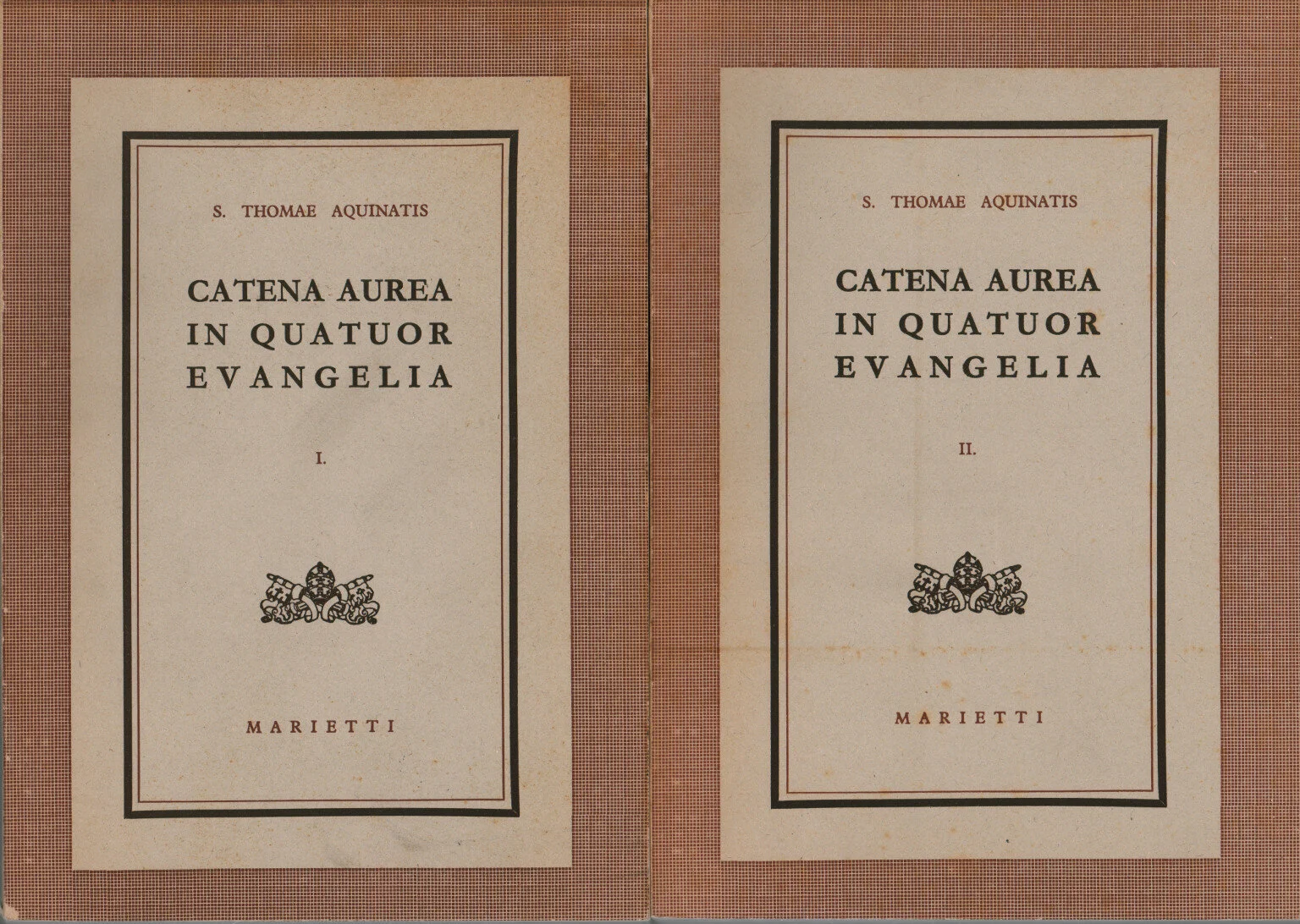
Read MoreCatena Aurea Call for Papers at 2022 Kalamazoo International Congress on Mediaeval Studies
Read MoreTwo journals are seeking submissions on topics related to Thomistic Studies: The European Journal for the Study of Thomas Aquinas and Studia Gilsoniana.
Fr. Anton ten Klooster, the Managing Editor of the European Journal for the Study of Thomas Aquinas, has been informing colleagues that his journal is seeking submissions. For information about the journal: https://sciendo.com/journal/EJSTA. Fr. ten Klooster can be reached at a.m.tenklooster@tilburguniversity.edu.
Dr. R. Mary Lemmons, special issue editor for Studia Gilsoniana, is also soliciting papers for the third special edition of Studia Gilsoniana on Thomistic Personalism. The second edition will be out in September with the following four papers: (1) "John Paul II’s Gamble with ‘the Meaning of Life” by Joshua P. Hochschild, (2) “No Meaning For Believers? A Reply To Joshua Hochschild” by Mirela Oliva, (3) “On the Foundational Compatibility of Phenomenology & Thomism” by Daniel C. Wagner, and (4) “Thomas Aquinas on Grace as a Mysterious Kind of Creature” by Elliott Polsky. Dr. Lemmons also noted that the editor-in-chief of Studia Gilsoniana, Fr. Pawel Tarasiewicz, is always looking for excellent submissions. More information about the journal can be found here: http://gilsonsociety.com/?studia-gilsoniana,16. For submissions to this special edition, Dr. Lemmons can be reached at rmlemmons@stthomas.edu.
The Society for Thomistic Personalism is soliciting abstracts for their satellite session at this year’s meeting of the American Catholic Philosophical Association, held November 18-21, 2021 in St. Louis, Missouri. Consider submitting a brief one-page abstract by e-mailing Dr. R. Mary Lemmons at rmlemmons@stthomas.edu by July 19th.
The session’s topic is Today’s Crisis and John Paul II. Potential presenters can choose which crisis they wish to address: relativism, American culture, abortion, assisted suicide, the invention of rights, the divorce culture, the rise of Marxism, the threat of democratic totalitarianism, socialism versus free enterprise versus laissez-faire capitalism, gender relativism, rabid secularism, practical atheism, unwed mothers, absent fathers, anti-family feminism, mass migration, et cetera. Abstract proposals are due by July 19.
The Aquinas Center for Theological Renewal at Ave Maria University and the Thomistic Institute of the Pontifical Faculty at the Dominican House of Studies invite papers for their co-sponsored conference on St. Thomas Aquinas as Spiritual Teacher: Theology in a Culture of Grace. The conference will take place at Ave Maria, Florida on February 10-12, 2022. At this event where we celebrate the spiritual benefits of St. Thomas's theology, we will also honor Archbishop J. Augustine Di Noia, O.P., Adjunct Secretary of the Congregation for the Doctrine of the Faith.
For more on this conference, which promises to be excellent, click here.

The time has come for another compte rendu of articles from recent issues of The Thomist. I will first discuss the articles in these issues generally, and then focus on two of particular note, at least in the eyes of this reviewer. The first is an article by Dr. Glen Coughlin on the old Thomistic debate regarding the relationship between natural philosophy and metaphysics. The second is Dr. Barrett Turner’s excellent contribution to the proper understanding of the ius gentium in Thomistic natural law theory. Both concern issues of importance regarding perennial principles dear to disciples of the Angelic Doctor, and they deserve to be well-known and carefully studied.
Read MoreThe time is long overdue for a compte rendu of articles from recent issues of the American Catholic Philosophical Quarterly. First, let’s note some of the articles in the first two issues of volume 95. Then, we will focus on a few of particular note. This will lead us, in closing, to a more extended look at the debate on the priority of “thought” to “talk”, between Fr. Nicanor Austriaco, O.P. and Dr. Marie George.
Read MoreCorpus Christianorum has announced two new series: Thomas de Aquino Graecus and Thomas de Aquino a Byzantinis receptus. Its aim is to produce “critical editions of Greek translations of, and commentaries on, various works by Thomas Aquinas composed by Byzantine scholars and theologians between the late thirteenth and fifteenth centuries.” For more information visit the webiste here.
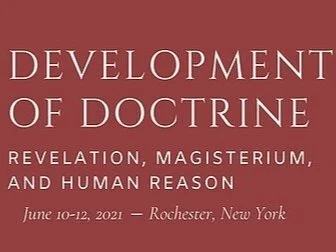
Sacra Doctrina Project conference June 10-13 in Rochester, NY. Call for Papers!
Read MoreThe readers of Thomistica are undoubtedly familiar with the ongoing publication of the complete works of St. Thomas in English.
Yesterday, January 28, it was announced that a similar project in Polish has been initiated by the Thomistic Institute in Warsaw, run by the Polish Province of the Dominican Order, and the Pro Futuro Theologiae Foundation at the Theology Faculty in Torún. The edition will comprise of seventy volumes and aims to be complete in 2035.

Signing the contract: From the left: Mateusz Przanowski OP, Fr. Piotr Roszak, Tomasz Grabowski OP, Piotr Paweł Orłowski
Chance and Indeterminacy in the Natural World
June 16-20, 2021 | Washington, DC
Aristotle claimed that nature works "always or for the most part" and this tension between fixed necessity and the randomness of "the most part" has always been a part of the study of nature. Classical physics seemed to paint a world where the "always" of determinism was at work, at least in principle, while contemporary quantum physics and evolutionary biology have pushed chance and randomness back into the spotlight in the study of nature. Are probabilities used in various physics, chemistry and biology simply an approximation for a complicated deterministic system, or is there some inherent indeterminism in nature? Do various fields of contemporary science understand and approach these questions the same way? Do the Aristotelian and Thomistic understanding of chance and necessity, act and potency, apply to contemporary questions about nature?
The Thomistic Philosophy and Natural Science Symposium gathers expert scientists and philosophers to discuss the potential compatibility and mutual enrichment of the study of Aquinas' philosophy of nature and various forms of modern scientific knowledge in mathematics, physics, chemistry, and biology.
The 2021 symposium will once again include a day of lectures geared towards an introduction to Thomistic philosophy and the history of science, with a focus on chance and indeterminacy. The rest of the symposium will have scientific experts discussing the understanding of chance, randomness, and indeterminacy in their own fields with one another and with philosophers.
Applications will open in January and are due by March 31.


Dominican House of Studies | Washington, D.C.
A graduate colloquium on Justice in Thomistic Ethics with Dr. Thomas Hibbs. The graduate colloquia are a new initiative of the TI intended to give a selection of emerging scholars from different PhD programs an opportunity to meet and work with other younger scholars that share their interests, and to benefit from the wisdom and formation of a senior scholar.
July 18 - July 24, 2021
About the Speaker:
Thomas Hibbs has been President of the University of Dallas since 2019. Previously, he served as distinguished Professor of Ethics & Culture and Dean of the Honors College at Baylor University. He is the author of books including Virtue's Splendor: Wisdom, Prudence, and the Human Good and Shows About Nothing, one of two books of his about film. His two most recent books are Wagering on an Ironic God: Pascal on Faith and Philosophy and Laudato Si: Nihilism, Beauty, and God (forthcoming, University of Notre Dame Press). He also has written on film, culture, books and higher education in publications including Books and Culture, Christianity Today, First Things, and The Chronicle of Higher Education.
Students currently enrolled in PhD programs in relevant disciplines are welcome to apply.
Successful applicants will receive a full tuition scholarship and room and board for the duration of the conference. A limited number of travel scholarships are also available; preference will be given to those accepted students who do not have access to institutional funding for travel.

Under the direction of the Sacra Doctrina Project