All the Kingdoms of the World

All the Kingdoms of the World

Kevin Vallier, in his book All the Kingdoms of the World: On Radical Religious Alternatives to Liberalism, presents the first book-length critique of the contemporary revival of Catholic integralism. Vallier’s work seeks to show the insufficiency of Catholic integralism as well as other religiously motivated anti-liberal theories. Vallier ultimately rejects Catholic integralism because, as he argues, it cannot transition from a liberal order to an integralist one, it is intrinsically unstable, and integralism is fundamentally unjust. Liberals, post-liberals, and integralists will find much to take from this book. Vallier’s arguments set an agenda for integralists to expand and deepen their own philosophical and theological politics.

Read More

Matter, Mathematics, and the Laws of Nature

Matter, Mathematics, and the Laws of Nature

Among the many contributors to the revival of the Aristotelian philosophy of nature in recent decades one must include the work of William Wallace, O.P., Benedict Ashley, O.P., Nancy Cartwright, Robert Koons, William Simpson, Edward Feser, and many others. We can now include Fr. Andrew Younan’s title, Matter and Mathematics. Younan’s work is a refreshing, briskly argued addition to recent debates about the nature of the laws of nature that avoids pointless detours into their details without eschewing their necessary substance.

Read More

A Reply to Michèle Mulchahey Regarding My Book on the Sermons of Aquinas

A Reply to Michèle Mulchahey Regarding My Book on the Sermons of Aquinas

RANDALL B. SMITH

Randall B. Smith (Professor of Theology, University of St. Thomas, Houston) replies to Michèle Mulchahey’s Review in The Thomist 83.3 (2019) of Smith’s book, Reading the Sermons of Thomas Aquinas: A Beginner’s Guide (Emmaus Academic, 2016).

Read More

Aquinas on Happiness as an Antidote to Modern Life

Aquinas on Happiness as an Antidote to Modern Life

CHRISTOPHER J. THOMPSON

In a small section of his famous work, the Summa Theologiae, St. Thomas Aquinas provides us with a basic tutorial on human flourishing. This well-known “treatise on human happiness” forms the skeletal outlines of the dominant desire at the core of every human heart: the inescapable need for happiness, fulfillment, bliss.

Read More

St Thomas Aquinas as a Model of Happiness

St Thomas Aquinas as a Model of Happiness

EDMUND WALDSTEIN, O.Cist.

The Greek historian Herodotus recounts that Solon, the lawgiver of Athens, travelled through the world and saw many things. On travelling through Asia Minor, he visited the fabulously wealthy king Croesus of Lydia. Croesus had his servants show off his many treasures to Solon. Then Croesus asked Solon who the happiest man…

Read More

The More than Seven Habits of Highly Holy People

The More than Seven Habits of Highly Holy People

Sullivan’s book is one with which further scholarly and even pastoral engagement is needed. Such were the contexts in which I studied the book, while leading a monthly seminar on Habits and Holiness during the 2021–22 academic year. The participants were diocesan priests in Wichita, and, apart from the fraternity of the group itself, the further purpose of the discussion was to become better ministers of the sacrament of confession towards the end of bearing greater spiritual fruit in the lives of penitents. After reviewing the scope and contents of the work, along with a closer look at some points of detail, I close with some feedback from the monthly seminar.

Read More

Intention and Representation: The Case of Thomas Aquinas

Intention and Representation: The Case of Thomas Aquinas

JOÃO PINHEIRO DA SILVA

After all, it is a common place in the history of philosophy that Aquinas was, following Aristotle, a realist in various philosophical domains. At the same time, Aquinas helped consolidate “intentio” in the philosophical grammar. We can then pose the question: does Aquinas use of “intentio” lead him down a representationalist path?

Read More

Calling All Teachers: Submit a Pedagogical Essay to Thomistica!

Do you ever teach material involving St. Thomas Aquinas? Do you have an insightful way of presenting St. Thomas on virtue? the soul? the First Way? Is there an “Introduction to Aquinas” class that you have found actually works?

As we near the end of another semester, looking back, have you finally found a way to convince your students of time-honored Thomistic wisdom?

Thomistica invites you to send an essay on your pedagogical approach to teaching the Angelic Doctor on any subject. Your fellow Thomistic teachers look forward to the benefit and discussion.

See the submissions page to send something our way.

THE TRIUMPH OF ST. THOMAS (BENOZZO GOZZOLI)

Recovering the Discarded Image of Man and Woman

Few topics inspire more controversy today than human sexuality and gender identity. There is no shortage of Thomistic reflections on the nature of sexual difference in human persons. Typically, Thomists must navigate between the manifest image of human sexual difference and Aquinas’s assumption of medieval Aristotelian biology (e.g., Nolan or Johnston), on the one hand, and, on the other hand, the post-scientific image of gender adopted in indefinitely diverse ways by our contemporaries. An array of ethical and moral theological literature on marriage, the conjugal act, and the family is ready to hand. …

Read More

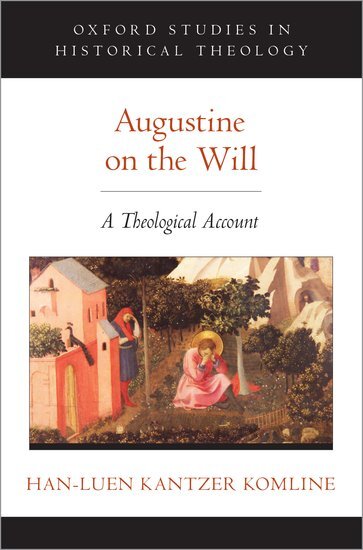
Augustine on the Will: A Theological Account

Augustine on the Will: A Theological Account

Han-Luen Kantzer Komline loves the Doctor of Grace not only as her theological guide but also as her personal companion, and that makes Augustine on the Will: A Theological Account a joy to read. Indeed, Kantzer Komline writes as though she traveled alongside St. Augustine from his conversion in Milan to his death in Hippo. Her prose is sophisticated with a familial lilt, a soulfulness that is rare in academic writing. Better still, she allows Augustine to speak for himself before she paraphrases or synthesizes; he was schooled as a rhetorician, after all. Rather than feigning originality, she allows Augustine to be Augustine without projecting any twenty-first century vogue onto him. Thus, Kantzer Komline presents a true theology, reaching the heart of what affiliates of the Sacra Doctrina Project cherish as “both scientia and sapientia.”

Read More

The Focus on Immanent Activity in the Second Way

The Focus on Immanent Activity in the Second Way

After presenting the “first and more manifest way” of proving the existence of God by reason alone (without the aid of God revealing himself in Sacred Scriptures), in Summa Theologiae Ia, 2, 3, Saint Thomas Aquinas continues this project by turning in the “Second Way” to what he somewhat enigmatically calls “the nature of the efficient cause.” The greatest obstacle to understanding his Second Way, though, is determining precisely what Aquinas means by “the nature of the efficient cause” and “an order of efficient causes,” and how the Second Way is distinct from the First and Third Ways. This essay attempts to do so.

Read More

The Return of the Manuals?

The Return of the Manuals?

Teaching the subjects of logic and natural theology well is no easy task, and aids are greatly to be desired, particularly by beginning teachers. Prof. Houser and Fr. Dodds have recently and respectively published excellent means to each end. My reason for discussing these two books together is to venture, at the end of this review essay, a few ideas concerning philosophical pedagogy in today’s classroom. This review of both books is based upon my own classroom use.

Read More

Newman on Truth and its counterfeits

Reinhard Hütter has written perhaps the most significant theological work of 2020. John Henry Newman On Truth and Its Counterfeits: A Guide for Our Times is a trenchant critique of contemporary culture providing insights gained by Hütter’s ease in making Sts. Thomas Aquinas and Newman conversation partners. Hütter astounds the reader not only has with his command of Newman’s writings but also by showing how each of Newman’s works fit into his life. For my part, I have found the book to be an important course-preparation resource for establishing a development of doctrine framework in the Church history classes I have taught in seminary over the past academic year. I am re-reading and discussing the text with one of our seminarians.

Read More