Contributions
View by Category
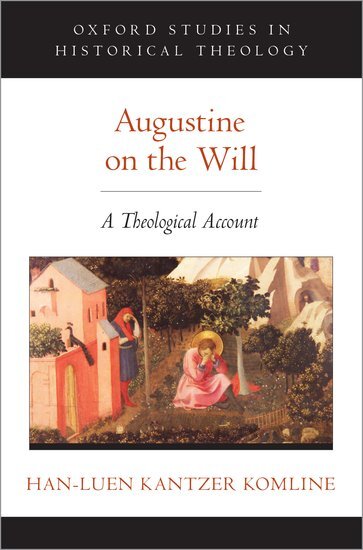
Augustine on the Will: A Theological Account
Han-Luen Kantzer Komline loves the Doctor of Grace not only as her theological guide but also as her personal companion, and that makes Augustine on the Will: A Theological Account a joy to read. Indeed, Kantzer Komline writes as though she traveled alongside St. Augustine from his conversion in Milan to his death in Hippo. Her prose is sophisticated with a familial lilt, a soulfulness that is rare in academic writing. Better still, she allows Augustine to speak for himself before she paraphrases or synthesizes; he was schooled as a rhetorician, after all. Rather than feigning originality, she allows Augustine to be Augustine without projecting any twenty-first century vogue onto him. Thus, Kantzer Komline presents a true theology, reaching the heart of what affiliates of the Sacra Doctrina Project cherish as “both scientia and sapientia.”

The Focus on Immanent Activity in the Second Way
After presenting the “first and more manifest way” of proving the existence of God by reason alone (without the aid of God revealing himself in Sacred Scriptures), in Summa Theologiae Ia, 2, 3, Saint Thomas Aquinas continues this project by turning in the “Second Way” to what he somewhat enigmatically calls “the nature of the efficient cause.” The greatest obstacle to understanding his Second Way, though, is determining precisely what Aquinas means by “the nature of the efficient cause” and “an order of efficient causes,” and how the Second Way is distinct from the First and Third Ways. This essay attempts to do so.

The Return of the Manuals?
Teaching the subjects of logic and natural theology well is no easy task, and aids are greatly to be desired, particularly by beginning teachers. Prof. Houser and Fr. Dodds have recently and respectively published excellent means to each end. My reason for discussing these two books together is to venture, at the end of this review essay, a few ideas concerning philosophical pedagogy in today’s classroom. This review of both books is based upon my own classroom use.

Newman on Truth and Its Counterfeits
Reinhard Hütter has written perhaps the most significant theological work of 2020. John Henry Newman On Truth and Its Counterfeits: A Guide for Our Times is a trenchant critique of contemporary culture providing insights gained by Hütter’s ease in making Sts. Thomas Aquinas and Newman conversation partners. Hütter astounds the reader not only has with his command of Newman’s writings but also by showing how each of Newman’s works fit into his life. For my part, I have found the book to be an important course-preparation resource for establishing a development of doctrine framework in the Church history classes I have taught in seminary over the past academic year. I am re-reading and discussing the text with one of our seminarians.

That Binding Yet Kindly Light
Stephen L. Brock’s The Light That Binds is an excellent treatment of St. Thomas Aquinas’s natural law teaching in the Summa theologiae. The exposition and argument present a cogent and insightful tour of the theological and metaphysical architecture of the legal transept, as it were, of the cathedral that is Aquinas’s Summa, all while engaging the views of a variety of contemporary scholars. In what follows, I consider the book overall, note some high points of its chapters, and offer some thoughts for future readers of the book.

At The Heart of Being: Thomistic Existentialism & Cosmological Reasoning
By JOHN BRUNGARDT, Ph.D.
In the following review-essay, I explore in some detail Knasas’s argumentation and some of its consequences. First, I will look at some of the background to the issues regarding the contemporary Thomistic schools of thought so as to set forth what is at stake in the debate (§1).

The Psychological Possibility of Mortal Sin: A Reply to Hart
By WILLIAM MATTHEW DIEM, S.T.D.
Although David Bentley Hart admits we can reject God, he insists that “we cannot do so with perfect knowledge and perfect freedom.” Although it’s true that no sane person is able to choose eternal misery as such, that is not relevant to the question: one need not choose misery to merit misery.

Thomas Aquinas Against the Originalists
By JONATHAN CULBREATH
As opposed to the originalist conception of law, St. Thomas teaches that law is an ordinance of reason for the common good promulgated by him who has power over the community, derived from the natural law itself, for the purpose of making men virtuous.
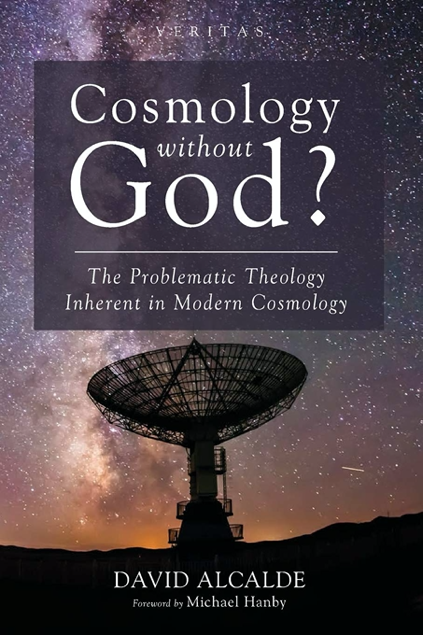
The Heavens Declare the Glory of God
In his monograph, Cosmology Without God? The Problematic Theology Inherent in Modern Cosmology—a revised version of his doctoral dissertation written under Michael Hanby at the Pontifical John Paul II Institute for Studies on Marriage and Family at the Catholic University of America—Fr. David Alcalde pronounces a harsh sentence on the cogency of much contemporary science-religion dialogue, in particular in the domain of theological claims made in virtue of the hypotheses, theories, or conclusions of modern cosmology