News




2026 ACPA Sacra Doctrina Project Satellite Sessions
The Sacra Doctrina Project warmly invites its members of all ranks, as well as other interested scholars, to submit paper proposals for our two sponsored satellite sessions for the 2026 annual meeting of the American Catholic Philosophical Association. In keeping with our mission, these satellite sessions intend to explore the philosophical principles and concepts traditional to Catholic theology and doctrine. Specifically, we propose to host two sessions:
Satellite Session I: “Praeambula fidei: Perennial Foundations for Theology.”
Satellite Session II: “Philosophical Principles for the Development of Dogma.”
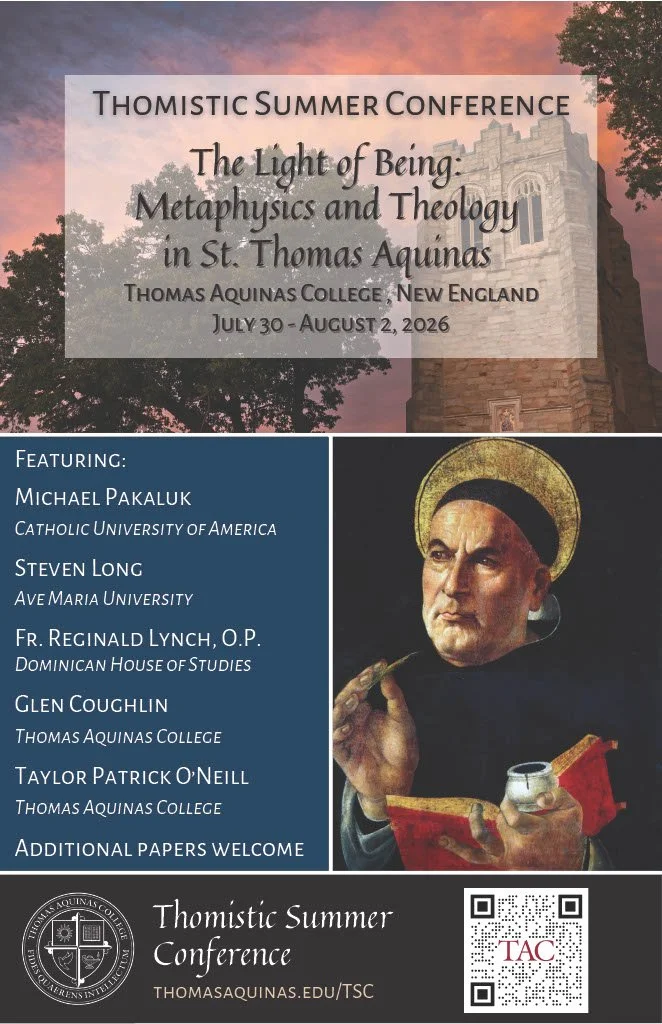
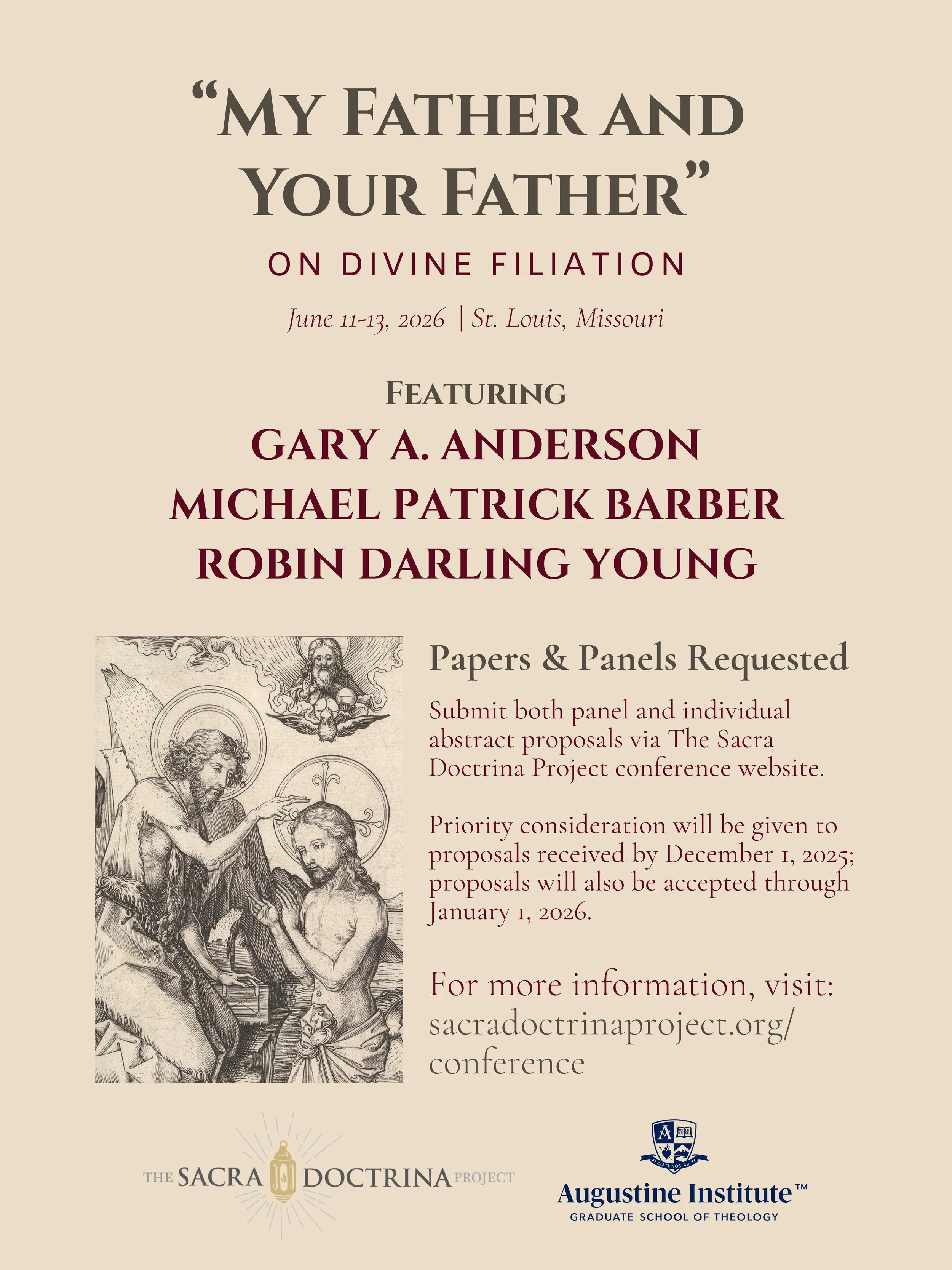

Thomas Aquinas & Sin
Ave Maria University and the Thomistic Institute have issued a call for papers for the conference Thomas Aquinas & Sin to be held at Ave Maria University from February 5-7, 2026.
The deadline for proposals is October 1, 2025.
Please email proposals to graduatetheology@avemaria.edu

Kalamazoo CFP - Center for Thomistic Studies and Thomas Aquinas Society
Several sessions will be devoted to Medieval philosophical and theological thought, especially that of Aquinas. The sessions are sponsored by:
The Center for Thomistic Studies (University of St. Thomas, Houston, Texas), Steven J. Jensen (jensensj@stthom.edu). Sessions will be devoted to any topic concerning the philosophy of Aquinas, his sources, or contemporary applications of his thought.
The Thomas Aquinas Society (Providence College), Robert Barry (rbarry@providence.edu). Sessions are devoted to the theological thought of Aquinas. Some special sessions will be devoted to Aquinas as a Biblical Theologian.
"Aquinas: Strategies and Methods" International Conference
Scholars from all over the World will discuss a social aspect of St. Aquinas's production:
the strategies and methods he adopted when dealing with different philosophical and
theological problems. During a conference "Aquinas: Strategies and Methods," organised at the Faculty of Philosophy of the University of Warsaw on May 28-30, 2025, we will hear before all such distinguished professors as: Constant Mews, Harm Goris, Eleonore Stump and Timothy Bellamah.
Call for Proposals: Society for Thomistic Personalism
Call for Proposals on Dr. Sister Prudence Allen's "Concept of Women: A Synthesis in One Volume."
In this synthesis, Allen argues, first, that intellectual history shows how the truth about sex and gender slowly unfolded among the children of Athens; second, that integral gender complementarity is not only the culmination of that process but is also the confirmation of Thomistic hylomorphism and John Paul II’s anthropology, and, third that integral gender complementarity satisfies John Henry Newman's criteria for the development of truth. The plethora of philosophical and theological insights embedded in this threefold argument are worthy of consideration in any age, but especially in this age of gender confusion.
Call for Papers: Reading the Gospel of Matthew with Thomas Aquinas
The conference, organized within the project of “National Programme for Development of Humanities” (NPRH) of the Ministry of Science and Higher Education in Poland, intends to develop more in full the progress that recently has been made in these areas and to investigate the central role of the Gospel of Matthew in Aquinas’ own thought.